



bodw Future Lab 2025
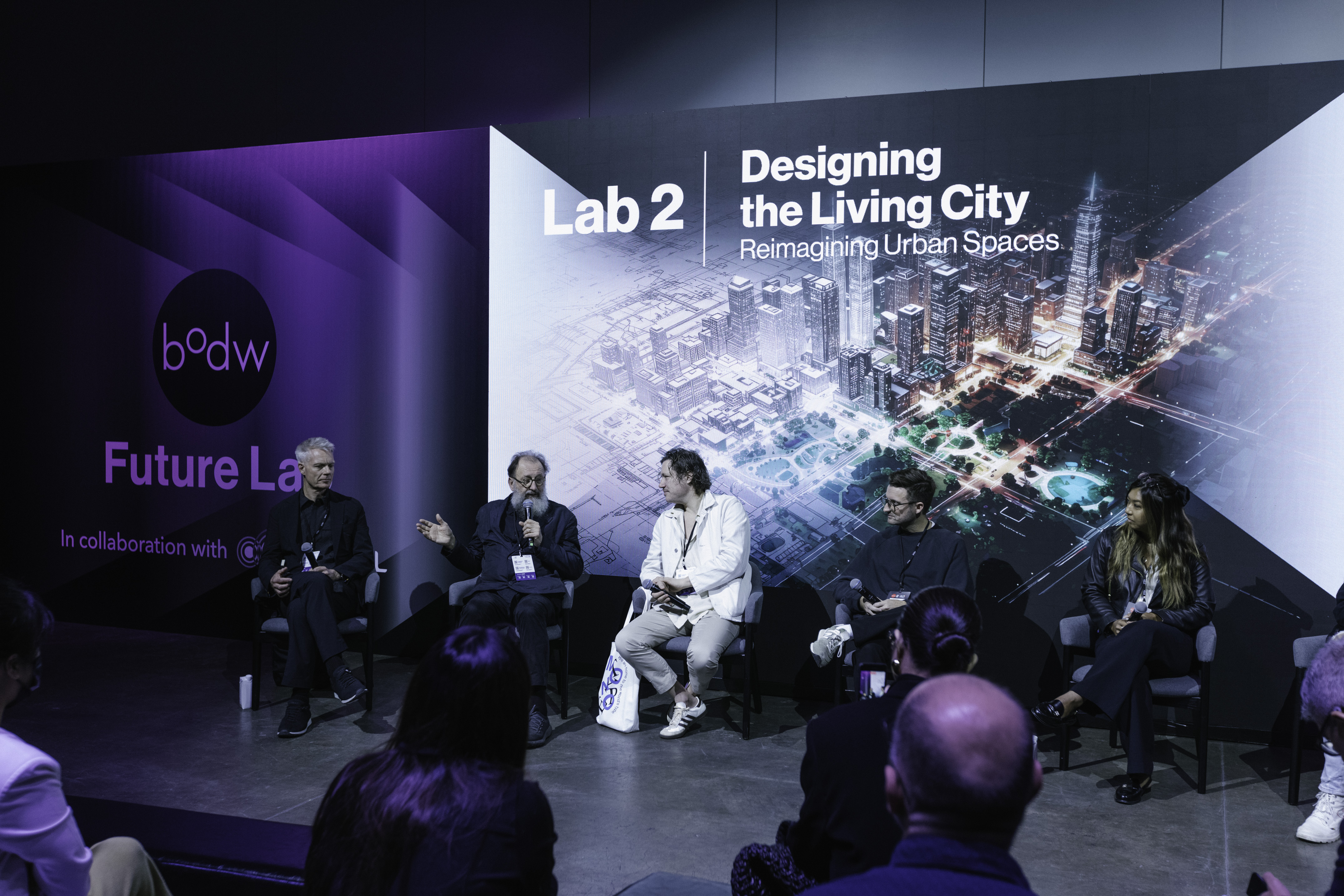
Lab 2 – Designing the Living City Reimagining Urban Spaces


Lab 2 – Designing the Living City Reimagining Urban Spaces
bodw Future Lab 2 explored how cities can move beyond being functional systems to become living, expressive environments shaped by culture, creativity, and community participation. Bringing together global and local leaders across design, architecture, music, curation, and urban activation, the Lab examined how underused urban spaces can be transformed into vibrant, inclusive hubs of connection and identity.
Through a structured process of panel dialogue, collaborative group work, and shared reflection, participants reframed the city as a participatory canvas, one that is continually shaped by people. Key insights highlighted that culture should be understood as a form of infrastructure; that activation is as critical as design; and that meaningful participation, rather than passive consumption, is central to creating cities that feel alive. Cultural heritage emerged not as something static to be preserved, but as a living resource that offers continuity, identity, and inspiration for future development.
The Lab generated a series of practical directions through a co-created “City Activation Plan”, identifying how art, music, temporary interventions, and cross-sector collaboration can re-energise urban environments. It also reinforced the importance of embedding Inclusive Innovation principles to ensure that activated spaces remain accessible, representative, and meaningful to diverse communities.
At its core, the Lab demonstrated the importance of imagination activated by process of cocreation, and the ability to see beyond current constraints and reimagine what cities can be.
The success of bodw Future Lab 2 strengthens the case for its continuation at BODW 2026 and its expansion into a year-round platform, positioning the HKDC as a global leader in design-led urban innovation.
“Reimagining spaces is about making the city loveable, not just liveable. This is the role of design.”
Why Future Lab, Why Now?
If Lab 1 asked how cities can become more inclusive, Lab 2 asked something equally important:
How do cities come alive?
It is possible to design a city that functions well, yet feels empty, and to build infrastructure that works efficiently, yet creates little sense of belonging. This is the tension that sat at the heart of Lab 2.
Cities are not only systems of movement, commerce, and infrastructure. They are also places of culture, identity, and expression. They are shaped not only by planners and policymakers, but also by artists, communities, and everyday interactions.
The question we explored was therefore not simply about functional design, but about human activation:
How can creativity, culture, and community collaboration transform urban spaces into places of connection, participation, and meaning?
Hong Kong again provided a powerful lens. A city of density and intensity, and rich with cultural energy, it also contains spaces that are underused, overlooked, or disconnected from everyday life. This duality makes it an ideal environment to explore how design can move from shaping space to shaping experience.
If Lab 1 asked how cities can become more inclusive, Lab 2 asked something equally important:
How do cities come alive?
It is possible to design a city that functions well, yet feels empty, and to build infrastructure that works efficiently, yet creates little sense of belonging. This is the tension that sat at the heart of Lab 2.
Cities are not only systems of movement, commerce, and infrastructure. They are also places of culture, identity, and expression. They are shaped not only by planners and policymakers, but also by artists, communities, and everyday interactions.
The question we explored was therefore not simply about functional design, but about human activation:
How can creativity, culture, and community collaboration transform urban spaces into places of connection, participation, and meaning?
Hong Kong again provided a powerful lens. A city of density and intensity, and rich with cultural energy, it also contains spaces that are underused, overlooked, or disconnected from everyday life. This duality makes it an ideal environment to explore how design can move from shaping space to shaping experience.

Designing the Lab: From Activation to Participation
As with Future Lab 1, the structure of the session was deliberately designed, but with a deliberate emphasis shift. Whilst Lab 1 focused on systems and inclusion, Lab 2 focused on activation and participation.
We designed the Lab as a journey going through the following:
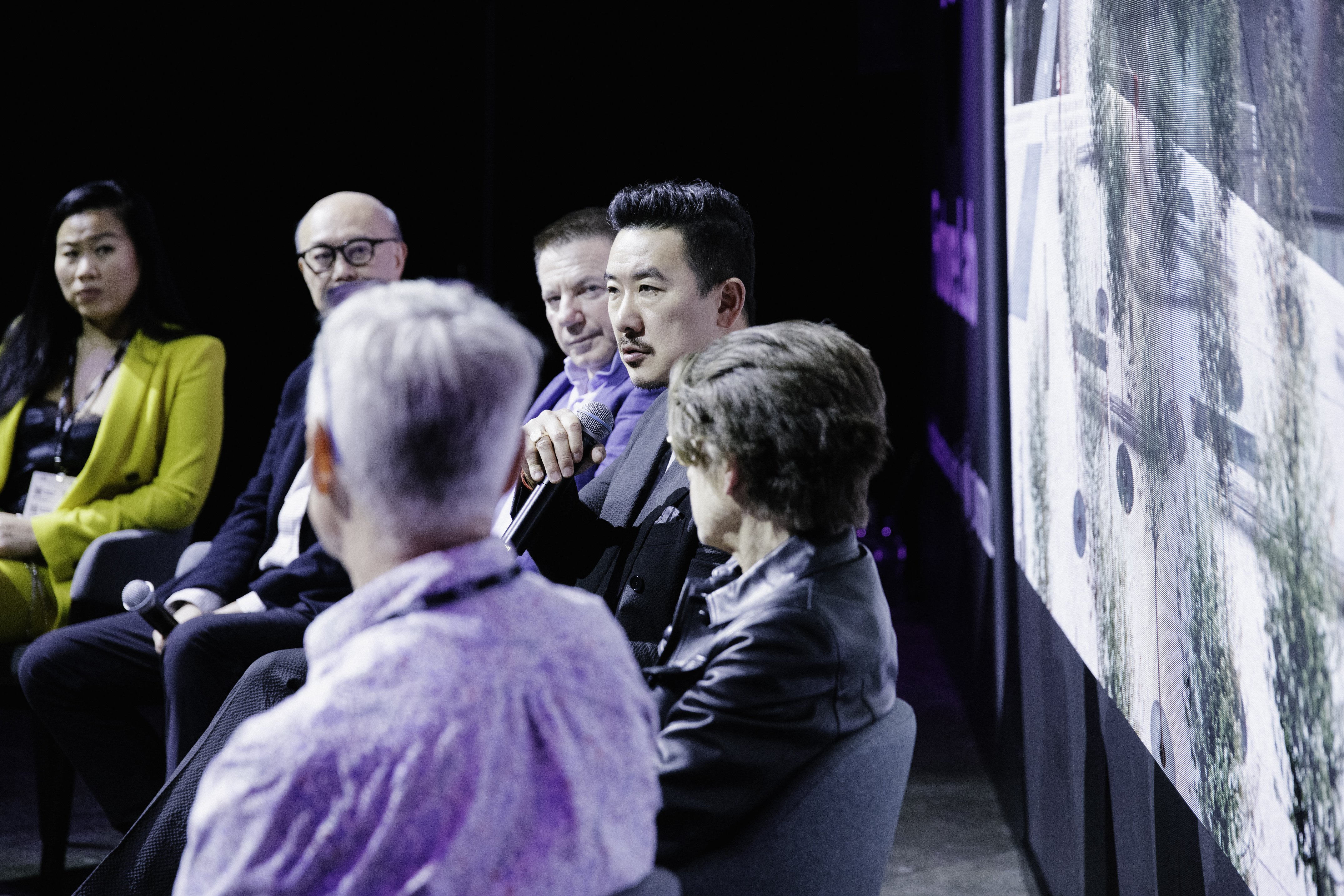
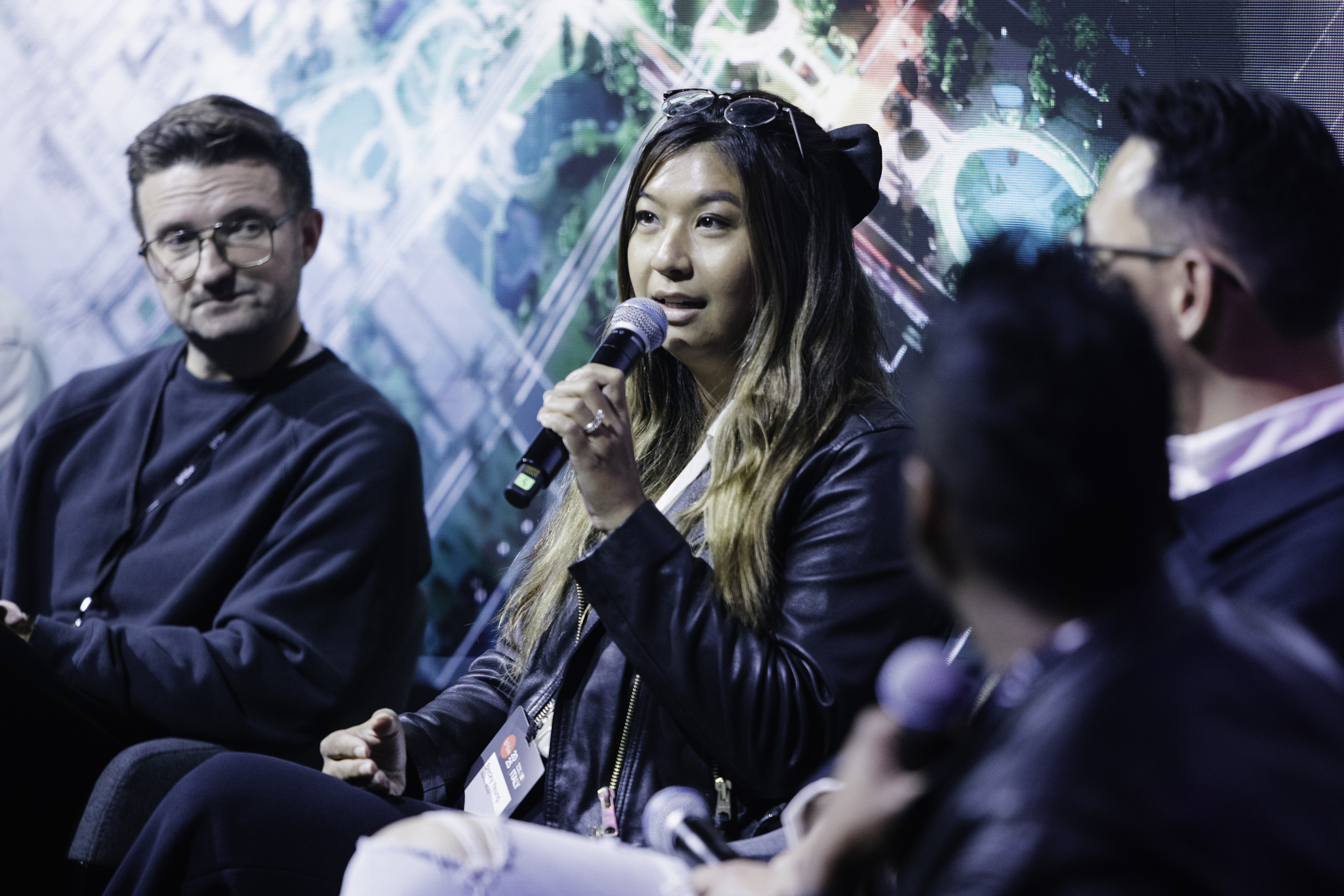
Panel Conversation: Framing the Living City
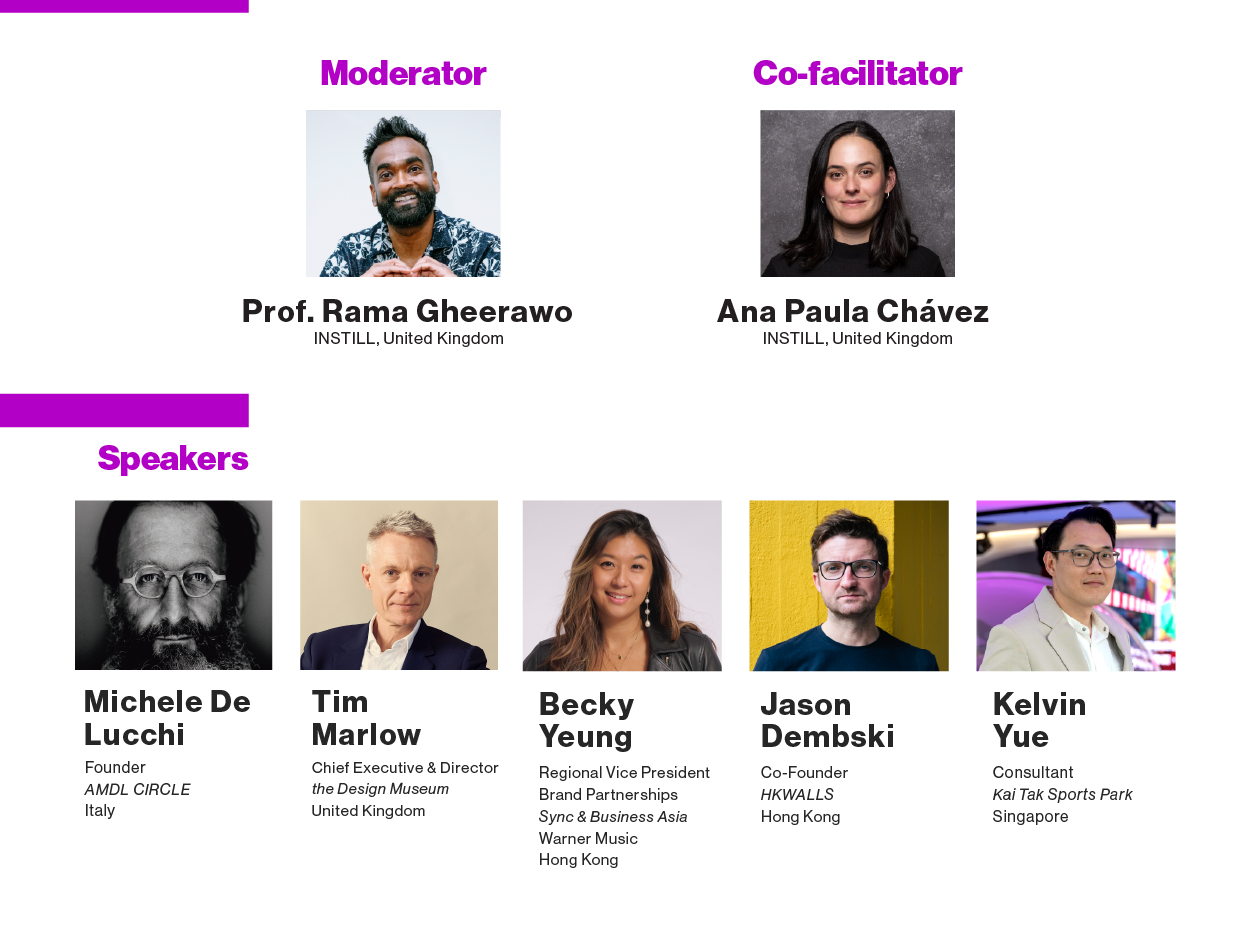
Speakers were invited to reflect on how their work activates cities through museums, architecture, design curation, street art, music, and large-scale public infrastructure.
The panel revealed a broad spectrum of approaches:
-
Cultural institutions as catalysts for public engagement
-
Architecture as an emotional and experiential medium
-
Grassroots art as a tool for identity and ownership
-
Music and partnerships as connectors across communities
-
Large-scale developments as potential cultural anchors
Rather than presenting fixed solutions, the panel opened up a palette of possibilities.
Group Work: Co-Creating the City
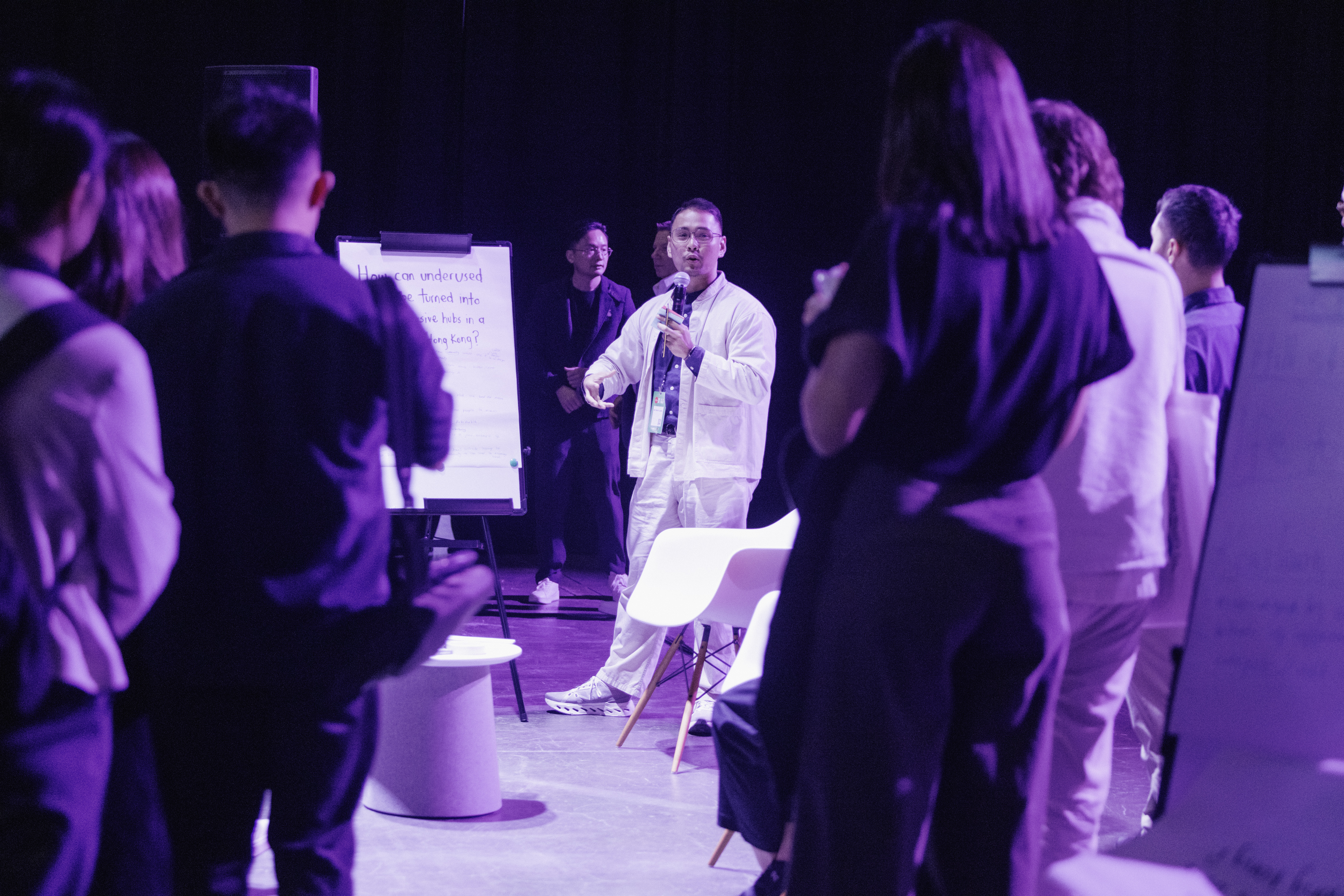
Participants then moved into collaborative groups to explore five “Living-City Challenges”, bringing together diverse perspectives to translate ideas into practical directions for urban activation. These were the findings:
-
Activating underused spaces
Participants explored how overlooked or transitional spaces could be reimagined as places of connection, using design and programming to unlock hidden potential within the city.
“The spaces we ignore often have the most to give.”
-
Ensuring diversity and representation
Groups considered how urban interventions can reflect the full spectrum of society, ensuring that different voices, cultures, and experiences are visible and valued in public space.
“If people don’t see themselves in the city, they won’t feel part of it.”
-
Integrating culture into dense environments
Participants examined how art, music, and storytelling can be embedded within high-density urban contexts to create moments of meaning and emotional connection.
“Density doesn’t have to mean uniformity, it can amplify expression.”
-
Enabling co-creation with communities
There was strong emphasis on shifting from consultation to collaboration, enabling communities to actively shape the environments they inhabit.
“The best spaces aren’t designed for people. They’re designed with them.”
-
Using temporary interventions to spark long-term change
Groups highlighted the power of pop-ups, installations, and events as low-risk ways to test ideas and shift perceptions, often leading to lasting transformation.
“Temporary actions can change how a place is seen forever.”
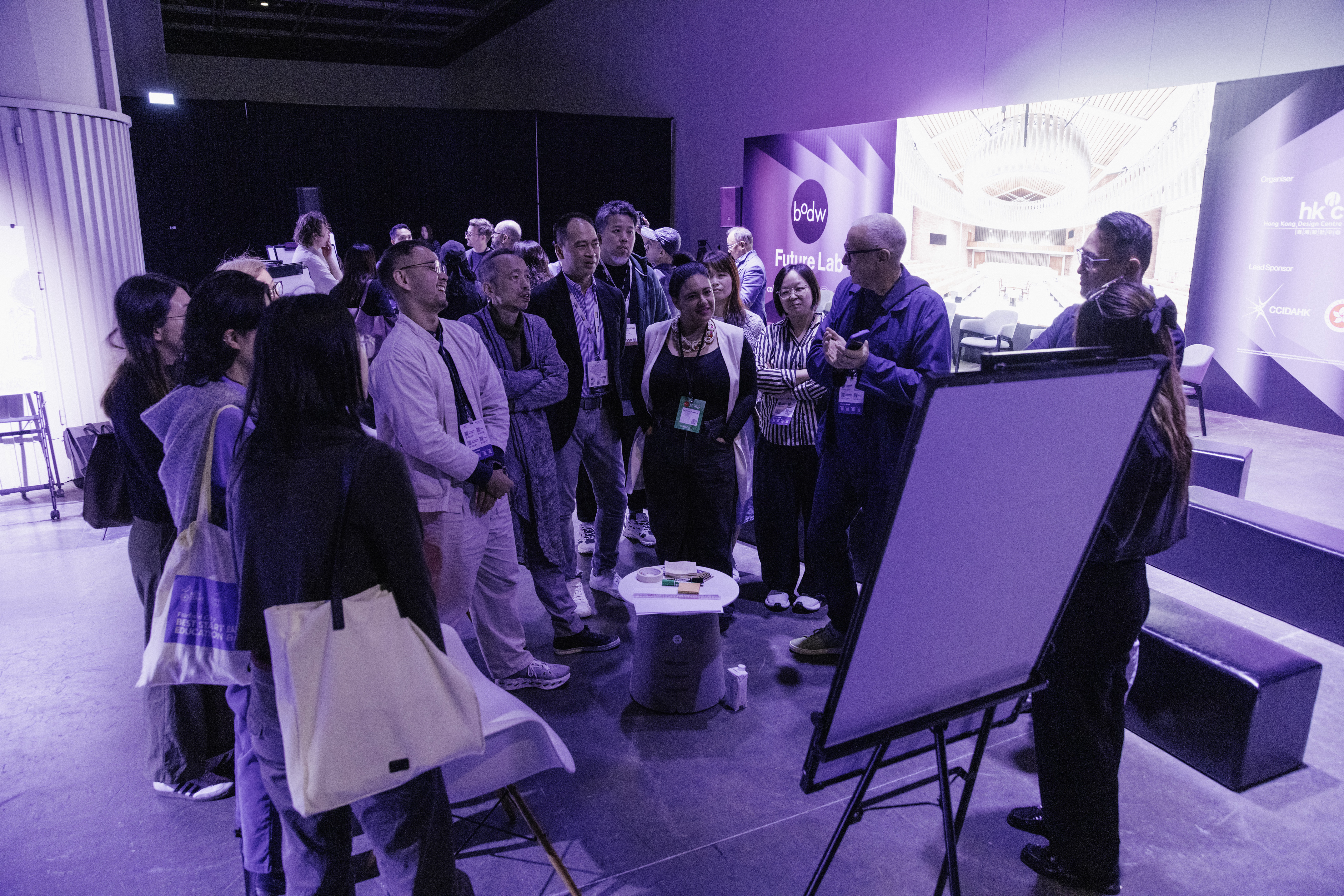
Speakers joined these groups, dissolving traditional conference hierarchies and enabling a richer exchange of ideas. This created an environment where expertise and lived experience carried equal weight, and where ideas could be challenged, refined, and strengthened collectively.
Reflection: From Ideas to Direction
In the final phase, ideas were shared and reflected upon collectively. As in Lab 1, speakers listened first, allowing participant insights to shape the closing discussion. This created a powerful feedback loop, reinforcing that the city is not something delivered to people but is something created with them.
What Happened in the Room
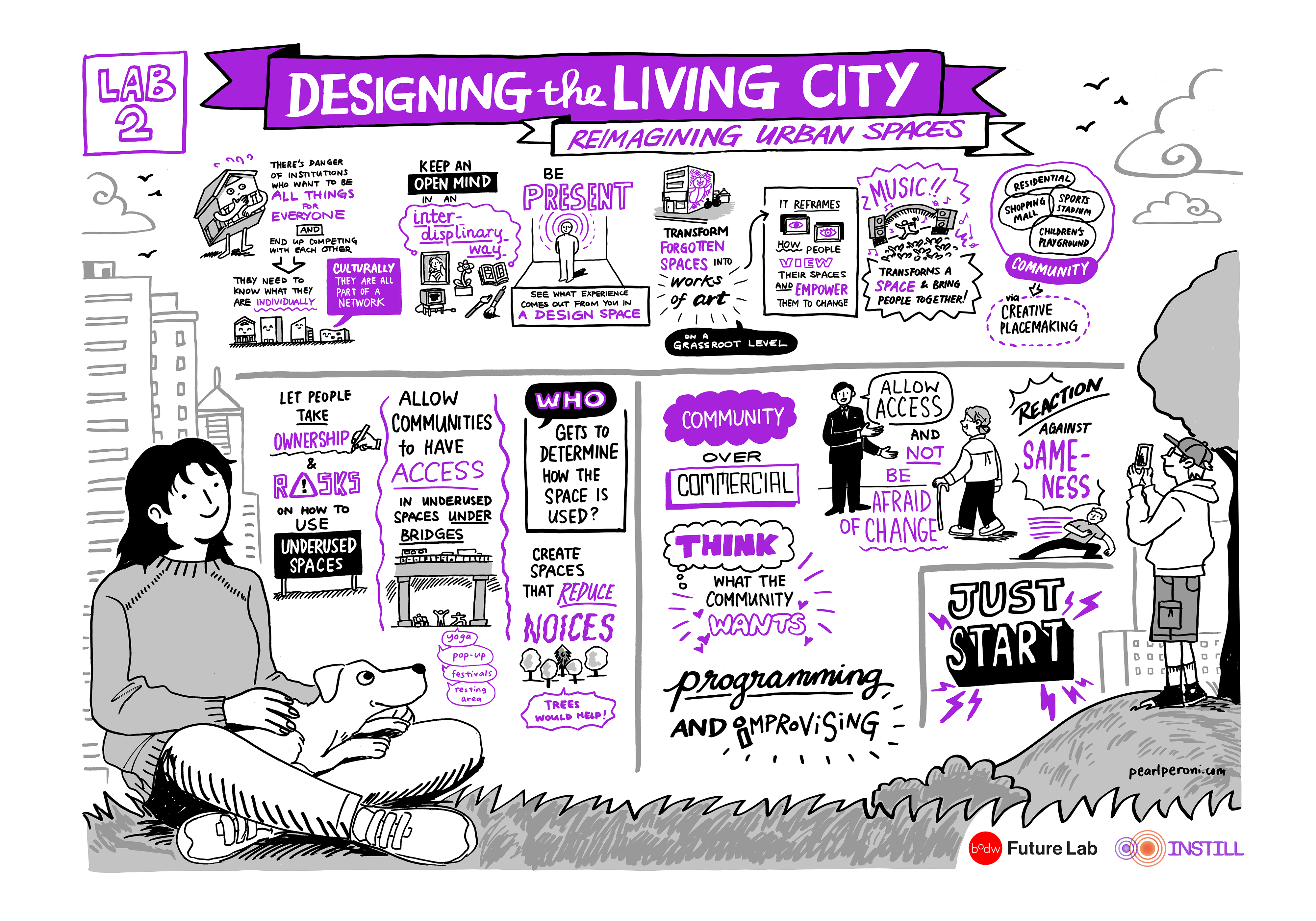
A defining moment in the Lab came when participants were asked to reframe the role of design in the city. The conversation moved away from designing static spaces towards designing dynamic experiences.
An overarching idea emerged:
Cities are not finished environments but present ongoing opportunities for design and creative intervention. What is needed is curation and frameworks for enabling this across sectors and communities.
This shift brought forward several key insights.
1. Culture is Infrastructure
“Culture is not something you add to a city, it’s what makes the city work.”
Participants recognised that culture, especially in the form of art, music, storytelling, and shared experience, is not decorative. It is foundational. Without cultural activation, spaces remain underused. With it, they become places of meaning and connection.
2. Activation Matters as Much as Design
“A well-designed space means nothing if very little happens in it.”
There was a strong sense that design alone is not enough. Design is an activator, and a framework that can bring other disciplines to the table. Spaces need to be activated
3. Participation Over Spectatorship
“People don’t just want to see the city, they want to shape it.”
Participants emphasised the importance of moving beyond passive consumption. The living city is one where people contribute, create, and engage. This proves the need for service design and co-creation. Cities where the community feels a sense of ownership and value are more likely to thrive.
4. Temporary Can Be Transformational
“Temporary interventions often create the most lasting change.”
Pop-ups, installations, and festivals were seen not as short-term fixes, but as powerful tools for experimentation and engagement. Design should investigate these are innovation opportunities.
5. Ownership Creates Belonging
“When people feel ownership of a space, they bring it to life.”
Grassroots initiatives, such as street art and community-led projects, were highlighted as key mechanisms for building identity and pride. Initiatives in other spaces and cities have also seen crime drop and negative behaviours become reduced.
What Participants Took Away
The group discussions translated these insights into practical directions. Participants consistently highlighted the importance of:
-
Designing spaces that invite interaction, not just occupation
-
Using culture to create shared experiences across diverse communities
-
Embedding flexibility so spaces can adapt and evolve
-
Creating opportunities for co-creation, not just passive consultation
A number of actionable ideas emerged:
-
Use temporary activations to test long-term possibilities
-
Partner with cultural organisations to programme public spaces
-
Integrate art, music, and storytelling into everyday environments
-
Design public spaces as platforms for community expression
Importantly, participants recognised that these approaches require coordination across sectors including design, government, business, and culture. Design was seen as central, and often the missing link.
From Insight to Action: The “So What”
For bodw Future Lab to create impact, these insights must translate into action.
For Designers and Creatives
The role expands beyond creating objects or spaces. It becomes about:
-
Designing experiences to include all citizens (Inclusive Design)
-
Facilitating participation especially from ignored and invisible citizens
-
Enabling personal and cultural expression
For Policymakers
There is an opportunity to:
-
Support cultural activation as a core part of urban strategy
-
Enable more flexible use of public space (zoning, usage, etc.)
-
Encourage experimentation through temporary interventions
For Businesses and Corporates
The Lab highlighted strong opportunities for:
-
Brand and cultural partnerships giving back to citizen and city.
-
Public-private partnerships (PPPs) to enhance civic engagement
-
Investment in cultural programming as a form of value creation
Activation was described as not just cultural but also as economic. The two go hand-in-hand.
For Hong Kong
There is a clear opportunity to:
-
Position itself as a leader in living-city innovation and multi-sector engagement
-
Leverage its cultural diversity as a strength across citizenship
-
Use design and creativity to enhance global identity, showing the power of an inclusive, creative approach
Inclusive Innovation as a Foundation
A critical thread throughout the Lab was the need to move beyond Inclusive Design as a discrete activity, and towards “Inclusive Innovation” as a strategic capability embedded across the entire system.
“If urban activation excludes people, it fails.”
Participants recognised that inclusion cannot sit at the edges of projects, to be addressed after key decisions have already been made. Instead, it must shape how ideas are conceived, how opportunities are identified, and how innovation itself is defined. Inclusive Innovation asks a deeper and more challenging question:
Who is innovation for, and who is it currently leaving behind? Who is not in the room when urban decisions are made and planning is proposed?
These reframing moves inclusion away from compliance and towards opportunity. It encourages organisations to design with (not just for) diverse communities, ensuring that solutions reflect a wider range of lived experiences across age, ability, culture, and socio-economic context. In doing so, it transforms inclusion into a driver of relevance, resilience, and long-term value.
In practical terms, this requires a shift in mindset and process and makes the case for design as a driving force. Inclusive Innovation must be embedded at:
-
the earliest stages of strategy and problem definition, taking ambitions ‘upstairs’ and ‘upstream’ in the creative process.
-
the formation of cross-sector partnerships and collaborations, even embedded into contracts
-
the testing, iteration, and evaluation of ideas in real-world contexts using the tools of people-centred design
It also demands new forms of leadership ones that are comfortable with complexity, open to multiple perspectives, and committed to designing beyond the “average” user.
For Hong Kong and the HKDC, this represents a significant strategic opportunity. By positioning Inclusive Innovation as a core capability, rather than a specialist discipline, HKDC can establish a distinctive global identity, and one that connects design excellence with social impact, expands market relevance, and enables more inclusive, future-ready urban development. This gives HKDC a distinct USP.
Culture as a Critical Urban Force
Alongside innovation, the Lab surfaced a powerful and consistent message:
culture is not an addition to the city but is one of its defining forces.
Too often, culture is treated as something to be layered onto completed developments, introduced late in the process to create atmosphere or identity. It is seen as an ‘add-on’. Yet participants repeatedly challenged this assumption, reframing culture as something far more fundamental. The bodw Future Lab saw it as a force that shapes how cities are experienced, understood, and remembered.
“Without culture, a city functions, but it does not connect.”
Art, music, storytelling, and creative expression were recognised as critical mechanisms for participation and belonging. They enable people to see themselves in the city, to contribute to it, and to feel a sense of ownership over shared spaces. Without this, even well-designed environments risk feeling anonymous, transactional, or disconnected.
This insight is particularly relevant in dense and fast-evolving cities such as Hong Kong, where the pace of development can outstrip the creation of meaning. Cultural activation, whether through grassroots initiatives such as street art, institutional programming, or partnerships with creative industries plays a vital role in bridging this gap.
Importantly, culture also acts as a connector across difference. It brings together communities that may otherwise remain separate, creating shared experiences that foster understanding, empathy, and cohesion. In this sense, culture is not only expressive, but integrative.
For bodw Future Lab, this reinforces a key principle:
A truly living city is not only designed and built but is continuously activated, expressed, and reinterpreted through culture.
Embedding culture as a strategic layer within urban development offers both social and economic value, strengthening identity while enhancing vibrancy and global relevance.
In collaboration with
Explore More Contents

