Chen Min’s New Design Language is Rooted in the Old

The Hangzhou-based, Hong Kong-smitten designer is using traditional Chinese crafts as a base for contemporary design with a global reach  

Zolima CityMag2026.01.12

Fresh off the plane from Hangzhou, designer Chen Min is sitting in a Hong Kong café thinking about bridges. Not literal ones, but the invisible spans between eras, cultures and ways of making. “I like to think of myself as a bridge,” he says. “I connect East and West, past and present, the idea with reality.”  


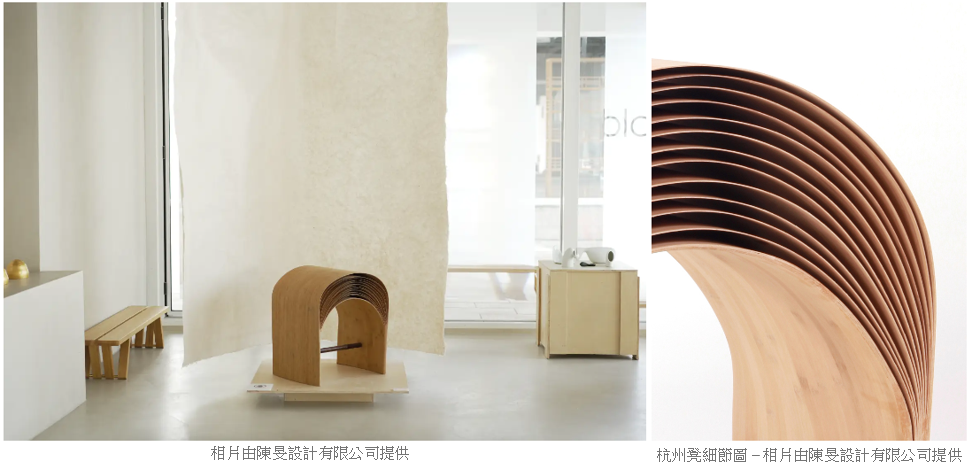
It goes to the heart of his design philosophy, which seeks to build something at once new and rooted in generations of Chinese craft. His approach is embodied by one of his earliest projects, one that earned him international recognition when it was released in 2013: the Hangzhou Stool. Crafted from 16 veneers of bamboo — each just 0.9 millimetres thick — the veneers are bent into a gentle arc and glued so that the seat curves like a ripple on water. A single piece of raw bamboo pierces the structure to connect the two ends. 


When you sit on the stool, the arc adjusts to your weight, giving it an elastic sensation. It's a moment of balance between tradition and innovation, a moment that translates bamboo's long history of use into something decidedly contemporary. “People in China easily understand design as a style,” says Chen. “But for me, it’s a language.” 


Chen was in Hong Kong to deliver a keynote address at the Business of Design Week (BODW) 2025 Summit, but this was just one of his many visits to the city. Despite being deeply rooted in Hangzhou, Chen is smitten with Hong Kong. “Hong Kong is exactly where East meets West,” he says. “And they’re still keeping their own identity. That's so interesting.” 


As a child of the 1980s, he grew up with Cantopop, Hong Kong movies and TVB shows — enough to motivate him to learn Cantonese. Hong Kong played a crucial role in his evolution as a designer, too. Chen still remembers his fascination with a 1997 poster by designer Alan Chan, featuring Mickey Mouse and Donald Duck dressed as characters from the classic wuxia novel Journey to the West. He found it a perfect fusion of cultures. “That was the moment I think, this is exactly what we need to do,” he says. 


A journey in design 


Chen was born in 1980 into a creative family. His grandfather was a woodcut artist and two of his uncles are design professors, one at the Design Academy Eindhoven in the Netherlands, where Chen went to study for an undergraduate degree in design. He followed that with a master’s degree from the Domus Academy in Milan, staying on as a teaching assistant afterward. In 2010, he returned home to China and established his studio, Chen Min Office, two years later.  


Chen credits his hometown with encouraging his approach to design. “People are always relaxed in Hangzhou,” he says. “They're never in a hurry.” Nature is minutes away: “You drive maybe 10 or 15 minutes, you find yourself surrounded by nature. It’s rare for a city in China.” 


That connection to landscape restores him. After Milan Design Week, he often fled to the Alps. Once, snowbound in Switzerland, he felt “how small people are.” The lesson stayed with him: “Sometimes you can forget about design and think about how to survive as a human.” 


It’s a grounding perspective that keeps him balanced — especially since Shanghai is just a quick train ride away. It’s close enough to do business, but far enough away that Chen has room to think. “It's a good excuse” for when he wants to opt out of meetings, design events or other activities. “I say, sorry, I'm in Hangzhou. Next time,” he laughs. 


With its long history as a haven for intellectuals and artists, Hangzhou has also proven fertile ground for thinking about the relationship between design and craft. After returning to China, Chen found himself grappling with a paradox that many visitors to the country notice immediately: it is a civilisation famed for its thousands of years of history, but where material reminders of that history can be surprisingly scarce. “A lot of people come to China and say they thought it's a country with 5,000 years of history,” says Chen. “But in the street, it's so hard to find a building that is older than 100 years.” 


To explain this disconnect, Chen reaches back to the roots of how cultures create. In Europe, he says, “it seems more like a 0 to 1 creation” — invention, disruption, bold leaps. China, by contrast, developed through “repetition and imitation,” a slow accumulation akin to “genetic mutation… a tiny detail in the DNA has changed.” It’s not about copying, he insists, but about refining: “We always imitate. We always follow what the masters teach. And then along the way, we think, ah, here’s maybe something that I can improve.” 


For Chen, “update” is not only more accurate than “innovate” — it’s more honest. It also explains why traditions can be fragile: once the chain of repetition breaks, knowledge can evaporate quickly. 


He’s seen it firsthand. In one visit to a silk manufacturer, he was stunned by the rarity of certain antique fabrics. “I was so surprised that they told me they cannot do a repetition of that,” he says. “Technology is so advanced, and they still cannot replicate it — just because the knowledge and skill are no longer there.” 


New and old together 


“More and more, the boundary between art, design and craft are blurring,” says Chen. Consumers, he argues, increasingly look for identity and meaning in the objects they buy. “We don't actually need as many industrialised products as before.” Handcrafted objects offer a warmth that industrial goods lack — a resonance born from material, process and human touch. 


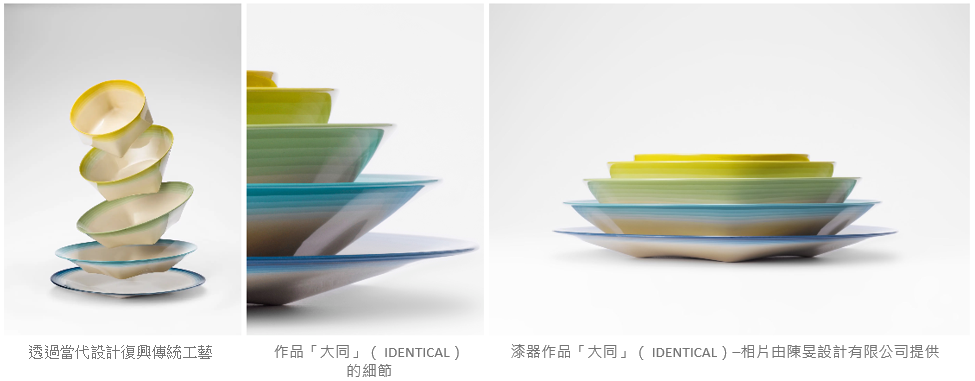
This melting together of disciplines inspired Chen’s platform neooold, which he launched in 2020 as an ongoing experiment in reviving heritage crafts through contemporary design. He brings together designers, artists and craftspeople from around the world to work with Chinese techniques like stone carving, lacquerware, silk and joinery, creating new works that straddle geographies and cultures. 


For someone so focused on the handmade, Chen is surprisingly optimistic about artificial intelligence. Far from threatening craft, he sees it as a tool that could restore what has been lost — a digital assistant to ancient knowledge. 


Imagine, he says, training AI on the gestures of a master craftsman in Kyoto, famous for the sound-based intuition with which he judged his copper tea caddies. “If I were him, I would totally have my AI machine recording what the [craftsman] said and give analysis. Once he passes away, we have his knowledge in hand.” It’s a vision where tradition and new technology aren’t adversaries but collaborators. 


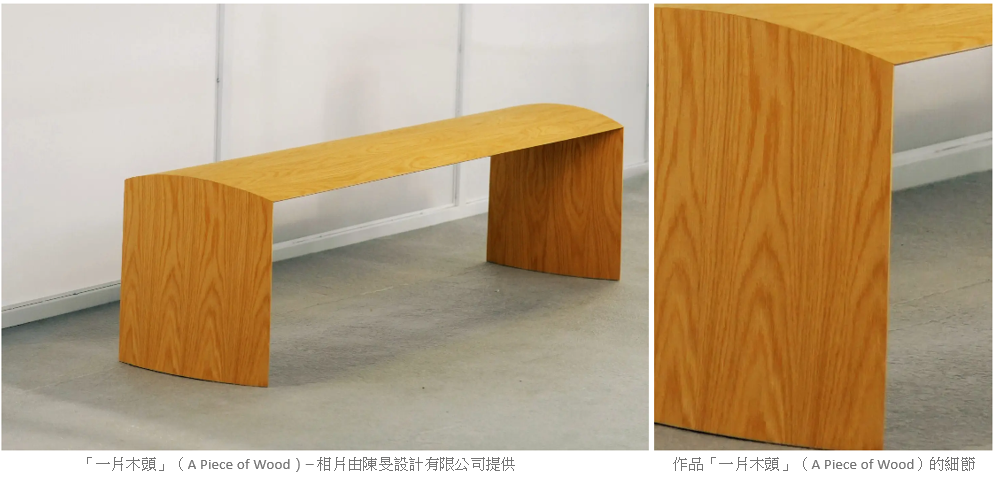
Chen’s recent furniture projects embody this search for hybrid, timeless form. Last year, he challenged himself to merge the design philosophies of Chinese and Western benches — the lightweight mobility of Chinese seating traditions with the monumental presence of a European church pew. 


The result began with a remarkably simple mould, shaping curved plywood shells inspired in part by boatbuilding and airplane wings. “Once you have two curves, you'll have a space like this,” he says, forming an invisible arch with his hands. “The inside is hollow, so it's very light, but it's very robust.” 


People who saw the prototype struggled to place it stylistically. “They cannot tell. It seems like Scandinavian, or a little bit Japanese… but it belongs to everywhere.” This universality is reflected in Chen’s name for the bench, which is simply A Piece of Wood. 


Chen’s approach has drawn the attention of major clients around the world, including Nike and IKEA. He is currently working on a major collaboration with Chinese luxury brand Shang Xia, which is shifting its focus toward lifestyle and furniture. “We are shaping a whole new home for Shang Xia,” he says. It will include lacquerware, carbon-fibre chairs blending French and Chinese typologies, and a modular shelving system — more than 20 furniture series in total. 


Meanwhile, neooold is preparing for its international debut in Milan next spring, showcasing the work of its first cross-cultural residency team, which includes Dutch designers, an Italian architect and a Japanese craftsman. After that, he’ll be preparing neooold’s first showroom, which is slated to open in New York in 2027.  


It will be a prominent new stage for his design language, one built from continuity rather than rupture, inheritance rather than invention. It’s a language that doesn’t discard the past but updates it — delicately, intelligently and endlessly. 


Writer: Christopher DeWolf  


This column is produced in partnership with Zolima CityMag, an online magazine that explores Hong Kong’s arts, design, history and culture.   


A black and grey logo

AI-generated content may be incorrect.